


English
March 23, 2025Digital Colonialism and Imperial Power
By Nadine Farid
The partnership between Big Tech, venture capital, and Israel is not merely a business arrangement; it is a manifestation of digital colonialism. Just as colonial powers exploited the Global South for resources and labor, Big Tech and venture capitalists extract data and profits from the oppression of Palestinians. These corporations are modern-day East India Companies, extending U.S. imperial power and reinforcing global inequalities. Their support for Israel serves the broader geopolitical interests of the American empire, from which they benefit. The use of Gaza as a laboratory for military technology raises profound ethical questions, as Palestinians are effectively treated as guinea pigs for weapons development, with their lives and suffering commodified for profit. This practice is part of a broader pattern of militarized capitalism, where occupied territories are exploited to test and market new technologies to global markets, perpetuating cycles of violence and inequality.
In recent years, the role of Big Tech in global conflicts has come under increasing scrutiny. Nowhere is this more evident than in the ongoing Israeli genocide against Palestinians, where Silicon Valley giants like Google, Meta (formerly Facebook), Amazon, and Microsoft have become complicit in the systematic oppression of an entire people. Behind the scenes, Israeli tech companies and startups—many with direct ties to Israel’s military and intelligence apparatus—have infiltrated Big Tech through acquisitions, partnerships, and the export of surveillance technologies.
The Unit 8200 Pipeline: From Military Intelligence to Big Tech
Google’s acquisition of Wiz for $32 billion is just the latest in a long series of deals that Israeli startups have used to infiltrate Big Tech. Unit 8200, Israel’s elite cyber intelligence unit, is often compared to the U.S. National Security Agency (NSA). It is the backbone of Israel’s surveillance state, responsible for developing cutting-edge technologies used to monitor, control, and suppress Palestinians in the occupied territories. But Unit 8200’s influence extends far beyond Israel’s borders. Many of its veterans go on to found or lead tech startups that are later acquired by Big Tech companies, creating a pipeline that funnels Israeli military expertise into Silicon Valley.
For example, Waze, the popular navigation app, was founded by Unit 8200 veterans and acquired by Google in 2013 for over $1 billion. Waze’s mapping data has been accused of aiding Israeli settlements in the West Bank, Which are illegal under international law. Similarly, MobileEye, An Israeli company specializing in autonomous vehicle technology, was acquired by Intel in 2017 for $15.3 billion. Its co-founder, Amnon Shashua, has openly supported Israeli settlements and donated to organizations that promote them.
These acquisitions are not isolated incidents. They are part of a broader trend in which Israeli tech companies, often with deep ties to the Israeli military, are absorbed into the global tech ecosystem. This allows Israel to export its militarised approach to surveillance and control, while Big Tech profits from the innovations born out of oppression.
Silicon Valley Venture Capital: Funding Genocide
Silicon Valley venture capitalists (VCs) are material collaborators in Israel’s genocide against Palestinians, playing a critical role in sustaining Israel’s military and economic dominance through weapons development, mutual investments, and ideological alignment.
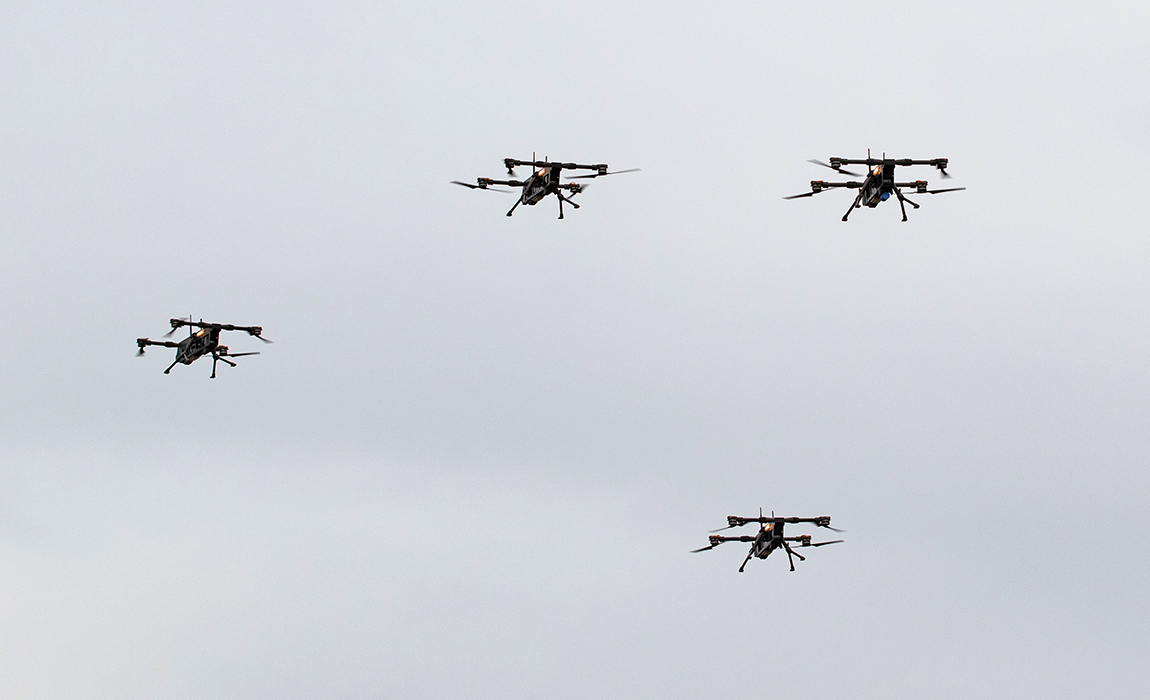
Weapons Startups and Military Collaboration: Companies like Skydio, a drone manufacturer, and ShieldAI, which develops AI for drone swarms, are actively used by the Israeli military. Palantir, the Peter Thiel-backed intelligence company, has a “strategic partnership” with the Israeli Ministry of Defense, providing technology for surveillance, intelligence, and targeting operations. Anduril, a major weapons startup backed by a16z, Founders Fund, and the CIA’s In-Q-Tel, has collaborated with Israeli weapons manufacturer Elbit Systems on projects like the militarised U.S.-Mexico border. While Anduril has not confirmed direct involvement in Gaza, its CEO, Palmer Luckey, has expressed “unqualified support” for Israel.
Venture Capital Funding for Israeli Startups: Since 2019, $32 billion has been invested in Israeli startups, with 51% of funding led or co-led by U.S.-based investors. In 2023 alone, Israeli startups raised $7 billion, with venture funding increasing even during the genocide. Firms like Team8, an Israeli VC focused on cybersecurity and AI, raised $500 million from U.S. tech giants like Cisco and Microsoft. Ibex Investors and Titan Innovations have launched funds specifically to support Israeli military and surveillance technologies.
Public and Ideological Support for Israel: Over 500 venture capitalists signed a statement expressing “unwavering support” for Israel, praising its contributions to the global tech ecosystem and encouraging further investment in Israeli startups. Prominent VC firms like Andreessen Horowitz, General Catalyst, and Founders Fund have publicly aligned themselves with Israel, with some executives using dehumanizing language to describe Palestinians. The “Network State” ideology, promoted by VCs like Balaji Srinivasan, draws direct parallels to Zionism, framing Israel as a model for creating venture capital-controlled sovereign states.
Through these actions, Silicon Valley venture capital has become a key enabler of Israel’s apartheid and genocide, reinforcing the intersection of militarism, capitalism, and imperialism.
The Role of AI in Enforcing Apartheid
Artificial Intelligence has become a cornerstone of Israel’s surveillance and control apparatus in the occupied Palestinian territories. AI-powered systems are used to monitor, predict, and suppress Palestinian life, often with the support of Big Tech companies that provide the infrastructure and tools necessary for these technologies to function.
AI-Assisted Genocide in Gaza
The Israeli military has been using AI programs like “Lavender” and “The Gospel” to identify and target Palestinians in Gaza. These systems operate with minimal human oversight, leading to what one former Israeli intelligence official described as a “mass assassination factory.”
Google and Amazon are directly involved in supporting these systems through their $1.2 billion Project Nimbus contract, which provides cloud computing infrastructure to the Israeli government and military. Despite protests from employees and activists under the “No Tech for Apartheid” campaign, both companies have refused to terminate the contract.
Facial Recognition and Mass Surveillance
AI-driven facial recognition systems, such as those developed by Israeli company AnyVision (now Oosto), are deployed at military checkpoints and in Palestinian cities to track and identify individuals. These systems are used to enforce segregation, restrict movement, and target activists.
In Hebron, one of the most heavily surveilled cities in the world, AI-powered cameras monitor Palestinians 24/7, creating a dystopian reality of constant surveillance.
Predictive Policing and Targeting
Israel uses AI algorithms to predict “security threats” and justify military actions. These systems often rely on biased data that criminalizes Palestinian existence, leading to arbitrary arrests, home demolitions, and extrajudicial killings.
The “Blue Wolf” program, for example, uses AI to collect biometric data on Palestinians, creating a vast database that facilitates racial profiling and control.
Resistance from Tech Workers and Activists
Amid the growing complicity of Big Tech in Israel’s genocide, tech workers and activists have organized to resist. Campaigns like #NoTechForGenocide and No Azure for Apartheid have emerged to pressure companies like Google, Amazon, and Microsoft to end their involvement in projects that support Israel’s military and apartheid regime.
In 2024, Microsoft fired two employees, Abdo Muhammad, and Hossam Nasr, for organizing a vigil at the company’s headquarters to honor Palestinians killed in Gaza. Both were part of the “No Azure for Apartheid” coalition, which opposes Microsoft’s sale of cloud-computing technology to Israel. Earlier in the year, Google fired over 50 workers for protesting the company’s Project Nimbus contract with Israel. These dismissals are part of a broader pattern of silencing dissent within Big Tech, particularly among Palestinian, Arab, and Muslim employees.
Organizations like the Tech Workers Coalition (TWC) and Jewish Voice for Peace (JVP) have also been vocal in supporting Palestinian rights and opposing tech companies’ involvement in Israel’s apartheid regime. TWC has helped build solidarity among tech workers, while JVP has mobilized Jewish communities and allies to take a stand against tech companies’ complicity in genocide.
The Boycott, Divestment, and Sanctions (BDS) movement has also targeted tech companies, calling for a boycott of products and services linked to Israel until they end their complicity in human rights violations. These efforts have drawn significant attention to the role of Big Tech in enabling genocide and have inspired employees within these companies to speak out against their employers’ unethical practices.
Israel’s Use of Gaza as a Testing Ground for Military Technology
Since October 2023, Israel has used the besieged enclave as a testing ground and marketing tool for its latest military technologies. This includes suicide drones, smart guns, and other advanced weaponry, which are deployed in Gaza before being marketed globally as “battle-tested” solutions.
Suicide Drones
Israel has deployed suicide drones, such as the “Harop,” in Gaza. These drones are designed to loiter over a target area before striking with precision.
The use of these drones in Gaza serves as a marketing strategy, with Israeli defense companies promoting them as “proven” technologies to potential buyers, including the U.S., India, and European nations.
Smart Guns and AI-Enhanced Weaponry
Israeli defense firms have introduced smart guns equipped with AI targeting systems, which are being tested in Gaza. These weapons are designed to reduce collateral damage by identifying and engaging specific targets with high accuracy.
However, reports from Gaza reveal that these technologies often fail to distinguish between combatants and civilians, resulting in widespread civilian casualties.
A Call for Accountability
The infiltration of Big Tech by Israeli startups and the influence of Unit 8200 represent a dangerous convergence of militarism and corporate power. As workers and consumers, we must demand accountability from companies like Google, Meta, and Amazon. This includes:
- Divesting from contracts that support Israeli apartheid, such as Project Nimbus.
- Ending censorship of pro-Palestinian voices on social media platforms.
- Refusing to profit from technologies born out of oppression.
- Supporting ethical tech initiatives that promote justice, transparency, and human rights. This includes backing employee-led movements like #NoTechForGenocide and NoAzure for Apartheid, as well as endorsing technologies designed to empower marginalised communities rather than exploit them.
- Promoting initiatives like Tech for Palestine, which focus on leveraging technology to support Palestinian rights, amplify their voices, and challenge the systems of oppression enabled by unethical tech practices. (Donate through this link)
The fight for Palestinian liberation is also a fight against the militarisation of technology. By exposing the ties between Big Tech, venture capital, and Israeli apartheid, we can begin to dismantle the systems that enable genocide and build a future where technology serves justice, not oppression.


